Brochure
Digital Marketing Strategy
Prezi presentation link: https://prezi.com/view/ka34mDjot4xk1YEBLhbp/
Let’s Ruin Christmas by Turning It into an Economics Lesson
Depending on which economic school of thought you belong to, Christmas is either a waste of resources or a valuable uptick in healthy activity

Christmas is a time to celebrate the birth of Christ, a high point of the movie season, an opportunity to get drunk around your family, and a flash point in the largely imaginary culture wars. For economists, though, Christmas is mostly a spike in economic activity, an outlier that results in an infuriating amount of waste.
Classical economists—who tend to think markets work best with minimal government intervention—could identify lots of sources of waste. First, there’s the waste created by bad gifts. We all get Christmas gifts that we don’t want and that we’d rather not have. And this is a tragedy not just because your Aunt Marge made you feel bad and you have to pretend to be really into the ladle she gave you, but because the money she spent on that ladle is money that could have been spent on something you’d have liked. That money isn’t just money—it represents real resources, in a world where we have a limited number.
But it goes beyond poor gifts. Because Christmas concentrates all this shopping in a single month of the year, it creates a huge amount of slack and spare capacity in the economy. Retailers, warehouses, and transportation businesses have to have the capacity to deal with the Christmas rush—capacity (in the form of mail trucks, say, or shelf space) that isn’t needed the rest of the year. If we could all (somehow) collectively decide to spend all that money more evenly throughout the year, the economy wouldn’t have to build all that spare capacity, which in turn would mean we’d be using our resources more efficiently, which means we’d all be richer, because the economy would have more resources per unit of time spent to obtain them.
Keynesian economists—who agree with the macroeconomic models pioneered by 20th-century economist John Maynard Keynes—would doubtless think that Christmas is a great idea, however. The shopping frenzy leads to all sorts of economic activity: Companies hire more workers to produce goods, to ship them, to stock them, to sell them, to advertise them. The spending—the aggregate demand—of the economy goes up and generates more economic activity, and that’s good for everyone. Keynesians think the economy is all about total spending: More spending means more economic activity means more jobs means everyone’s happy.
Which side is right? Well, they both have a point. We’ve heard a lot more about Keynesian economics since the financial crisis of 2008, when all the world’s economies went down the drain and there was debate over how much money should be injected into them to prevent them from collapsing entirely. Christmas is mostly wasted spending, but wasted spending can be good when the economy is in a deep slump, and the only thing that can kickstart it is an upsurge of spending.
Keynes himself once semi-joked during the Great Depression that the government hiring workers to dig holes and then fill them up again would be a valuable use of its resources, exactly the sort of thing that would have a classical economist tear his (and they’re mostly he’s) hair out. As best as we can tell, over the time we have been monitoring this stuff since the Great Depression, when there is indeed a deep slump, Keynes is right, but the rest of the time he’s wrong. When the economy is in a slump, you need some way—any way—to increase its spending and kickstart economic activity. But when it’s humming along, irrational bursts of spending just direct resources away from more productive activities and make everyone subtly poorer.
But this disagreement goes beyond technical economic jargon and gets at a fundamental, even philosophical, disagreement about what the “economy” is. You can call them the “productionist” and the “creationist” view (here, “creationist” has nothing to do with fundamentalist interpretations of the Bible). This is a more subtle, and most often implicit, distinction that doesn’t map perfectly onto the Keynesian/classical divide.
Productionists, which include Donald Trump and many disciples of Keynes (though not, it should be noted, Keynes himself), believe that an economy’s fundamental function is to provide jobs to people and to produce the level of economic activity necessary for those jobs. If you’re a productionist, you essentially believe that the economy is a huge endless cycle of buying and selling, and the goal of economists and politicians is to keep the cycle humming along so that it employs enough people. Left-wing productionists emphasize that workers should have high wages so they’ll buy more stuff, and that’ll keep the cycle going; right-wing productionists emphasize that businesses need to make profits so they’ll hire people, which will keep the cycle going—they have massive fights over this on TV and in op-ed pages and faculty lounges, but deep down, they have the same worldview.
Creationists, meanwhile, believe that the function of the economy is to enable people to create stuff. Productionists essentially don’t care what people buy and sell so long as the cycle keeps going. Creationists, however, think it matters very much. When Henry Ford invents the Model T, or Steve Jobs invents the iPhone, or for that matter, when your buddy from college starts his craft beer business, we’re made better off not because these people will create jobs or provide some incentive for people to spend money, but because they’ve produced stuff that didn’t exist before and make our lives better. The free market’s cycle of buying and selling just happens to be the least bad way we’ve come up with to enable that creative process.
So, where does that leave Christmas? Is it good or bad for the economy? Well, who knows. The only way to know for sure would be to create an Earth B that’s identical in every respect, except without Christmas, and we can’t do that. I can tell you what I think. I think that economic models are important, but that what makes the economy go is people, not things, and that not all aspects of people are captured by economic models. I think maybe the most economically significant part of Christmas isn’t the buying and selling. It’s what we call the non-economic parts: spending time with our families, and maybe extending more acts of kindness to our neighbors than we usually do. If these things make us into better adjusted, more compassionate human beings, that actually has an impact on what economists call “human capital,” which is the most important kind of capital and determines everything else in the long run. The economic lesson of Christmas is that the most important things in economics might not be economics at all.
Is Litecoin a fork of Bitcoin?
Many people were confused by the word fork and thought Litecoin was a fork of Bitcoin. Is it the case? This article clarifies it.
What does fork mean?
The word fork has mainly four meanings in the crypto space. That is the major source of the confusions. Thus, we need to clarify the meanings first and know what people are actually talking about.
Software project fork
This is defined in Wikipedia as the following.
in software engineering, a projectfork happens when developers take a copy of source code from one software package and start independent development on it, creating a distinct and separate piece of software.
For this meaning, Litecoin is a fork of Bitcoin because the Litecoin project’s code was copied from Bitcoin and then modified.
Soft-fork
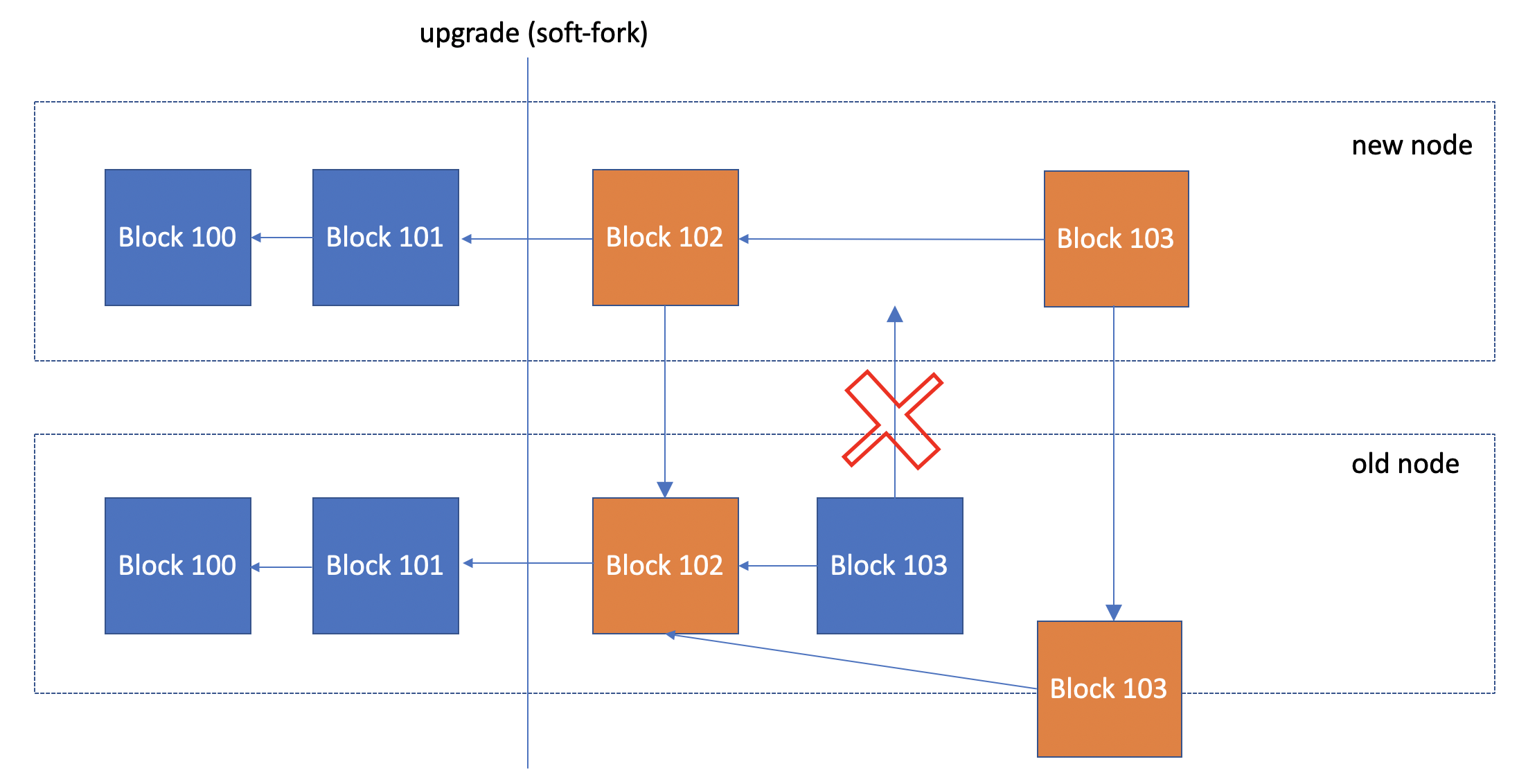
A soft-fork is an upgrade of the consensus protocol that is backward compatible. Therefore, new blocks generated by new nodes can be accepted by old nodes, and thus old nodes do not need to upgrade and can still run although they may not recognise some content in the new blocks. It is a gentle form of upgrades, and that is where the name comes from.
Hard-fork
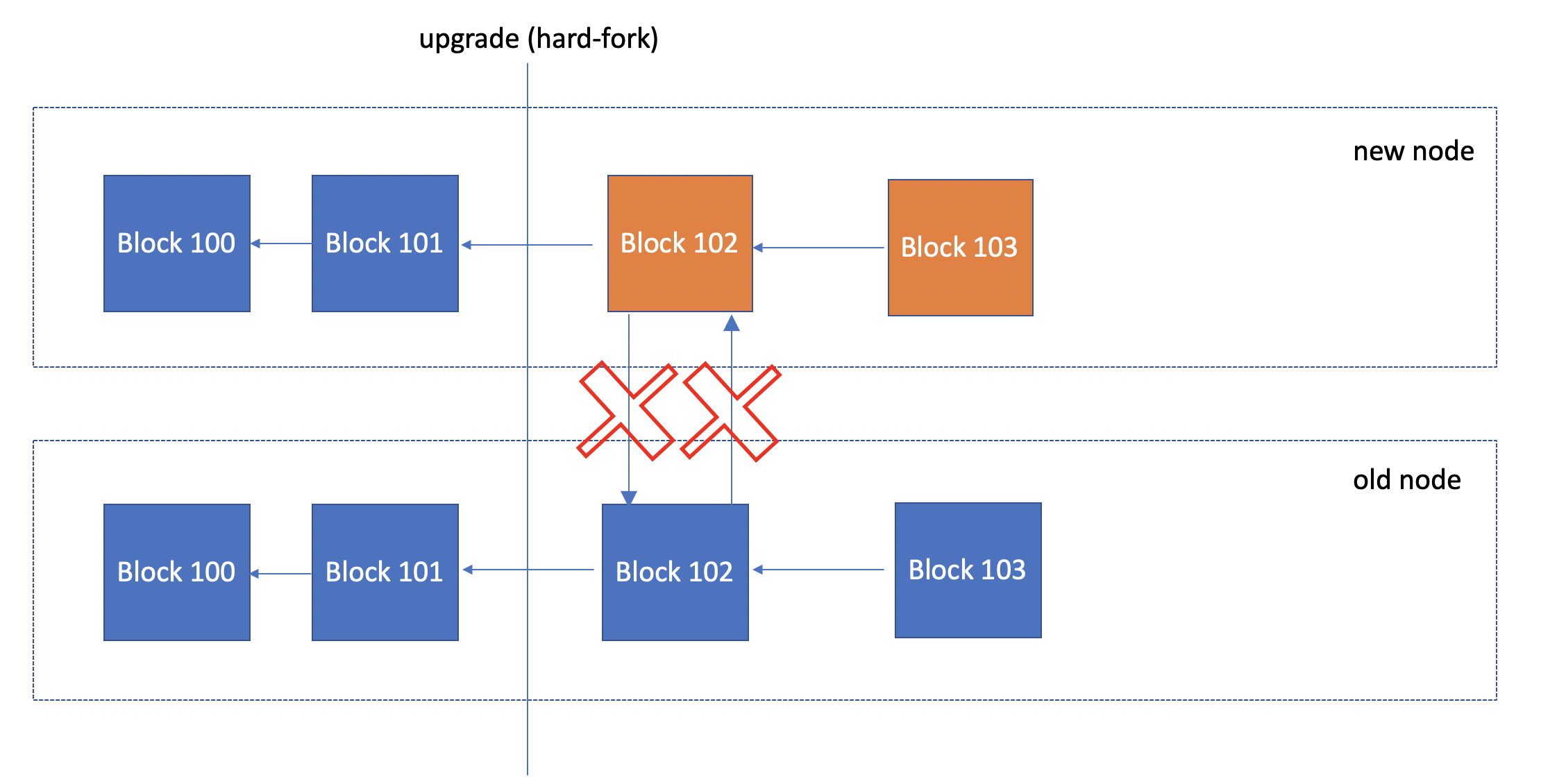
A hard-fork is an upgrade of the consensus protocol that is not backward compatible. Illustrated as the following figure, nodes with a hard-fork will generate blocks (brow blocks) that will be rejected by old nodes. Bitcoin Cash is a hard-fork of Bitcoin because Bitcoin Cash’s blocks cannot be recognised by Bitcoin nodes. A hard-fork basically creates a new coin, and for old nodes to accept the new blocks, they have to upgrade.
Conclusion
The Litecoin project’s code is forked from Bitcoin.
However, because Litecoin and Bitcoin share no common ancestor, Litecoin is neither a soft-fork nor a hard-fork of Bitcoin, and it is also not a sustained chain split of Bitcoin.
We can verify that by comparing block 0 (aka Genesis block) of Bitcoin, Bitcoin Cash, and Litecoin shown below. We see Bitcoin and Bitcoin Cash share exactly the same Genesis block, but Litecoin’s Genesis block was created by Charlie Lee separately, so Litecoin is a completely new blockchain.

